
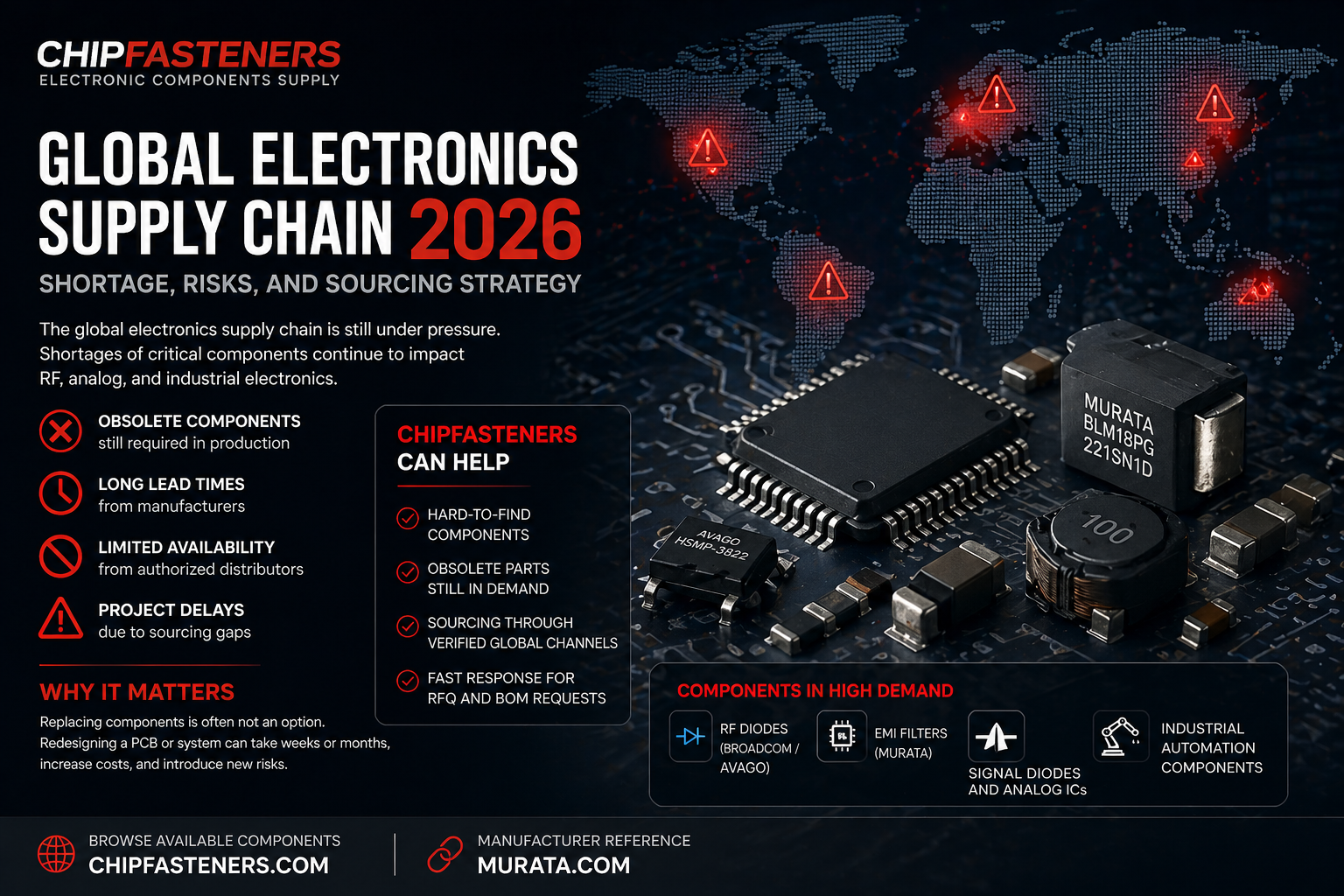
STM32 Microcontrollers is a commercial and engineering cluster for industrial buyers, OEM procurement teams, maintenance engineers, automation engineers, electronics developers, repair departments, and system integrators. It connects technology knowledge with manufacturer context, product pages, comparison logic, cross-reference strategy, and RFQ readiness.
This resource focuses on Arm Cortex-M microcontrollers used in embedded control, industrial automation, HMI, telemetry, and long-life OEM platforms. It is written for buyers who need practical decisions rather than marketing claims: what to check, what can fail, what can be replaced, when redesign is justified, and how to prepare a sourcing request that reduces delay.
Cluster navigation
Overview | Buying Guide | Comparison | FAQ | Cross Reference
Related products and manufacturers
Manufacturers: STMicroelectronics.
Related products: STM32H743ZIT6.
Related clusters: Industrial Motion Sensors Power Management.
Technical overview
The technical decision starts with the function of the component inside the system. A procurement team may search by MPN, but engineering validation depends on electrical behaviour, package, temperature range, reliability target, compliance, board constraints, firmware dependency, and whether the device is already qualified in production.
For industrial automation, telecommunications, medical electronics, automotive electronics, robotics, IIoT equipment, PLC peripherals, HMI panels, and industrial computers, the cost of a wrong substitute can exceed the component price many times. A similar part can still create boot failures, measurement drift, thermal stress, communication instability, or unexpected field returns.
Technology families
FamilyIndustrial roleSelection riskSTM32F0Used in Arm Cortex-M microcontrollers used in embedded control, industrial automation, HMI, telemetry, and long-life OEM platformsCheck lifecycle, package, temperature, compatibility, and availability.STM32F1Used in Arm Cortex-M microcontrollers used in embedded control, industrial automation, HMI, telemetry, and long-life OEM platformsCheck lifecycle, package, temperature, compatibility, and availability.STM32F4Used in Arm Cortex-M microcontrollers used in embedded control, industrial automation, HMI, telemetry, and long-life OEM platformsCheck lifecycle, package, temperature, compatibility, and availability.STM32F7Used in Arm Cortex-M microcontrollers used in embedded control, industrial automation, HMI, telemetry, and long-life OEM platformsCheck lifecycle, package, temperature, compatibility, and availability.STM32H7Used in Arm Cortex-M microcontrollers used in embedded control, industrial automation, HMI, telemetry, and long-life OEM platformsCheck lifecycle, package, temperature, compatibility, and availability.STM32G4Used in Arm Cortex-M microcontrollers used in embedded control, industrial automation, HMI, telemetry, and long-life OEM platformsCheck lifecycle, package, temperature, compatibility, and availability.STM32MP1Used in Arm Cortex-M microcontrollers used in embedded control, industrial automation, HMI, telemetry, and long-life OEM platformsCheck lifecycle, package, temperature, compatibility, and availability.Selection criteria
CriterionWhy it mattersProcurement actionExact MPNPrevents incompatible sourcing decisions and production delays.Confirm in RFQ notes before accepting an offer.Package and footprintPrevents incompatible sourcing decisions and production delays.Confirm in RFQ notes before accepting an offer.Temperature rangePrevents incompatible sourcing decisions and production delays.Confirm in RFQ notes before accepting an offer.Lifecycle statusPrevents incompatible sourcing decisions and production delays.Confirm in RFQ notes before accepting an offer.CompliancePrevents incompatible sourcing decisions and production delays.Confirm in RFQ notes before accepting an offer.TraceabilityPrevents incompatible sourcing decisions and production delays.Confirm in RFQ notes before accepting an offer.Available quantityPrevents incompatible sourcing decisions and production delays.Confirm in RFQ notes before accepting an offer.Lead timePrevents incompatible sourcing decisions and production delays.Confirm in RFQ notes before accepting an offer.Typical mistakes
Common mistakes include matching only by keywords, ignoring package suffixes, assuming consumer and industrial grades are interchangeable, accepting unknown-channel stock without traceability, overlooking moisture sensitivity, skipping lifecycle checks, and failing to involve engineering when an alternate is proposed.
Industrial applications
Typical demand comes from industrial automation, robotics, motor control, HMI panels, medical electronics, telemetry, IIoT gateways. In these environments, parts are often purchased for production continuity, line maintenance, spare inventory, redesign avoidance, and urgent repair of equipment that cannot wait for a full platform refresh.
Family-by-family engineering notes
STM32F0
STM32F0 should be evaluated as part of the complete equipment architecture, not as an isolated catalogue keyword. Engineering teams should confirm the electrical role, board interface, package suffix, temperature grade, qualification history, firmware dependency, and whether the family is already approved in the customer BOM. Procurement teams should verify whether the exact part number is still broadly available or whether sourcing depends on remote stock, legacy inventory, or controlled-channel availability.
When this family is used in a long-life platform, the practical buying decision is usually driven by downtime cost, redesign lead time, and the risk of requalification. If the platform is already in production or maintenance, the safest path is often to secure exact MPN supply first, then evaluate alternates only when the original device cannot be sourced in the required quantity or timeframe.
STM32F1
STM32F1 should be evaluated as part of the complete equipment architecture, not as an isolated catalogue keyword. Engineering teams should confirm the electrical role, board interface, package suffix, temperature grade, qualification history, firmware dependency, and whether the family is already approved in the customer BOM. Procurement teams should verify whether the exact part number is still broadly available or whether sourcing depends on remote stock, legacy inventory, or controlled-channel availability.
When this family is used in a long-life platform, the practical buying decision is usually driven by downtime cost, redesign lead time, and the risk of requalification. If the platform is already in production or maintenance, the safest path is often to secure exact MPN supply first, then evaluate alternates only when the original device cannot be sourced in the required quantity or timeframe.
STM32F4
STM32F4 should be evaluated as part of the complete equipment architecture, not as an isolated catalogue keyword. Engineering teams should confirm the electrical role, board interface, package suffix, temperature grade, qualification history, firmware dependency, and whether the family is already approved in the customer BOM. Procurement teams should verify whether the exact part number is still broadly available or whether sourcing depends on remote stock, legacy inventory, or controlled-channel availability.
When this family is used in a long-life platform, the practical buying decision is usually driven by downtime cost, redesign lead time, and the risk of requalification. If the platform is already in production or maintenance, the safest path is often to secure exact MPN supply first, then evaluate alternates only when the original device cannot be sourced in the required quantity or timeframe.
STM32F7
STM32F7 should be evaluated as part of the complete equipment architecture, not as an isolated catalogue keyword. Engineering teams should confirm the electrical role, board interface, package suffix, temperature grade, qualification history, firmware dependency, and whether the family is already approved in the customer BOM. Procurement teams should verify whether the exact part number is still broadly available or whether sourcing depends on remote stock, legacy inventory, or controlled-channel availability.
When this family is used in a long-life platform, the practical buying decision is usually driven by downtime cost, redesign lead time, and the risk of requalification. If the platform is already in production or maintenance, the safest path is often to secure exact MPN supply first, then evaluate alternates only when the original device cannot be sourced in the required quantity or timeframe.
STM32H7
STM32H7 should be evaluated as part of the complete equipment architecture, not as an isolated catalogue keyword. Engineering teams should confirm the electrical role, board interface, package suffix, temperature grade, qualification history, firmware dependency, and whether the family is already approved in the customer BOM. Procurement teams should verify whether the exact part number is still broadly available or whether sourcing depends on remote stock, legacy inventory, or controlled-channel availability.
When this family is used in a long-life platform, the practical buying decision is usually driven by downtime cost, redesign lead time, and the risk of requalification. If the platform is already in production or maintenance, the safest path is often to secure exact MPN supply first, then evaluate alternates only when the original device cannot be sourced in the required quantity or timeframe.
STM32G4
STM32G4 should be evaluated as part of the complete equipment architecture, not as an isolated catalogue keyword. Engineering teams should confirm the electrical role, board interface, package suffix, temperature grade, qualification history, firmware dependency, and whether the family is already approved in the customer BOM. Procurement teams should verify whether the exact part number is still broadly available or whether sourcing depends on remote stock, legacy inventory, or controlled-channel availability.
When this family is used in a long-life platform, the practical buying decision is usually driven by downtime cost, redesign lead time, and the risk of requalification. If the platform is already in production or maintenance, the safest path is often to secure exact MPN supply first, then evaluate alternates only when the original device cannot be sourced in the required quantity or timeframe.
STM32MP1
STM32MP1 should be evaluated as part of the complete equipment architecture, not as an isolated catalogue keyword. Engineering teams should confirm the electrical role, board interface, package suffix, temperature grade, qualification history, firmware dependency, and whether the family is already approved in the customer BOM. Procurement teams should verify whether the exact part number is still broadly available or whether sourcing depends on remote stock, legacy inventory, or controlled-channel availability.
When this family is used in a long-life platform, the practical buying decision is usually driven by downtime cost, redesign lead time, and the risk of requalification. If the platform is already in production or maintenance, the safest path is often to secure exact MPN supply first, then evaluate alternates only when the original device cannot be sourced in the required quantity or timeframe.
Application-specific sourcing notes
Industrial Automation
In industrial automation, the buyer should connect the component request to the real equipment function. Important context includes operating environment, service interval, expected lifetime, compliance constraints, downtime cost, and whether the component is used in production, field repair, or qualification builds. This context helps filter offers that may look similar but create unacceptable engineering or reliability risk.
Robotics
In robotics, the buyer should connect the component request to the real equipment function. Important context includes operating environment, service interval, expected lifetime, compliance constraints, downtime cost, and whether the component is used in production, field repair, or qualification builds. This context helps filter offers that may look similar but create unacceptable engineering or reliability risk.
Motor Control
In motor control, the buyer should connect the component request to the real equipment function. Important context includes operating environment, service interval, expected lifetime, compliance constraints, downtime cost, and whether the component is used in production, field repair, or qualification builds. This context helps filter offers that may look similar but create unacceptable engineering or reliability risk.
HMI Panels
In HMI panels, the buyer should connect the component request to the real equipment function. Important context includes operating environment, service interval, expected lifetime, compliance constraints, downtime cost, and whether the component is used in production, field repair, or qualification builds. This context helps filter offers that may look similar but create unacceptable engineering or reliability risk.
Medical Electronics
In medical electronics, the buyer should connect the component request to the real equipment function. Important context includes operating environment, service interval, expected lifetime, compliance constraints, downtime cost, and whether the component is used in production, field repair, or qualification builds. This context helps filter offers that may look similar but create unacceptable engineering or reliability risk.
Telemetry
In telemetry, the buyer should connect the component request to the real equipment function. Important context includes operating environment, service interval, expected lifetime, compliance constraints, downtime cost, and whether the component is used in production, field repair, or qualification builds. This context helps filter offers that may look similar but create unacceptable engineering or reliability risk.
IIoT Gateways
In IIoT gateways, the buyer should connect the component request to the real equipment function. Important context includes operating environment, service interval, expected lifetime, compliance constraints, downtime cost, and whether the component is used in production, field repair, or qualification builds. This context helps filter offers that may look similar but create unacceptable engineering or reliability risk.
Lifecycle and replacement strategy
Lifecycle risk should be reviewed before the last production buy, not after stock disappears. If the exact part is available, buying verified original stock can be safer than redesign. If the exact part is obsolete or allocation-limited, the replacement process should compare electrical fit, mechanical fit, firmware impact, qualification effort, compliance, and future availability.
Lifecycle signalRiskRecommended actionActive but long lead timeProduction planning riskReserve stock and confirm lead time before committing build datesNRNDFuture availability riskStart alternate qualification while exact stock remains availableEOL noticeLast-time-buy riskCalculate lifetime demand and approve repair stock strategyObsolete but still installedMaintenance downtime riskPrioritize exact sourcing, traceability, and compatibility reviewUnknown lifecycleProcurement uncertaintyRequest manufacturer confirmation or distributor evidencePackaging, environment, and reliability
Packaging influences assembly yield, thermal behaviour, vibration tolerance, rework risk, and board compatibility. Environmental requirements include temperature range, humidity exposure, storage conditions, shock, vibration, contamination, and expected service life. Reliability should be evaluated against the equipment use case rather than generic catalogue availability.
CheckEngineering concernCommercial concernPackage suffixFootprint, pinout, reflow profile, rework riskOffer may be incompatible despite same base MPNTemperature gradeOperation in cabinets, outdoor equipment, vehicles, or sealed modulesIndustrial grade may have lower availabilityMoisture sensitivityAssembly handling and baking requirementsStorage and logistics requirements must be clearDate codeQualification and warranty constraintsStrict date-code demands can reduce available supplyComplianceRoHS, REACH, automotive or medical restrictionsDocumentation may be required before purchase approvalTypical failure modes and diagnostic context
Field failures are rarely caused by the component alone. They may come from heat, vibration, poor derating, power sequencing, software assumptions, contamination, assembly stress, ESD, or ageing of surrounding components. Before replacing a device, engineering teams should document the failure symptom, operating condition, board revision, previous repair attempts, and whether the same component fails repeatedly across multiple units.
For procurement, this diagnostic context matters because emergency sourcing without root-cause understanding can lead to repeat failures. If a part is used in a high-stress area, the replacement strategy should consider derating margin, lot traceability, thermal design, and whether a later revision of the same family improves reliability without forcing a full redesign.
Counterfeit avoidance
Counterfeit risk increases when a part becomes scarce. Buyers should request traceability where possible, compare markings and packaging, review supplier history, avoid unexplained price anomalies, and separate urgent repair sourcing from long-term approved vendor qualification.
Supplier qualification and documentation
A professional RFQ should ask for manufacturer, exact MPN, available quantity, lead time, package condition, traceability level, country of dispatch, payment terms, inspection options, and whether the offer is for new original stock. For sensitive programs, buyers may also request photos, label evidence, certificate of conformity, test report, or escrowed samples before full purchase.
Remote stock and RFQ workflow
Remote stock means availability is not necessarily held in the local warehouse, but may be accessible through verified sourcing channels. A strong RFQ should include quantity, target delivery date, destination country, accepted alternates, date-code restrictions, documentation requirements, and whether partial delivery is acceptable.
Replace, redesign, or reserve stock?
SituationBest pathReasonEquipment is down and exact MPN is availableBuy exact componentFastest path with lowest compatibility riskExact MPN is scarce but platform is still activeReserve stock and start alternate reviewProtect production while engineering validates optionsComponent has repeated field failuresReview root cause before bulk purchaseReplacement alone may not solve thermal or system-level stressProduct will remain in service for yearsPlan lifetime or buffer stockAvoid future line stoppage and unplanned redesignNew design has not yet frozenConsider current-generation alternativesAvoid locking a new platform to a supply-constrained partSummary
The strongest sourcing strategy combines exact-part discovery, qualified alternatives, lifecycle planning, and clear RFQ communication. This cluster is designed to help search engines and buyers understand the full relationship between technology, manufacturer, family, product, article, comparison, cross-reference, FAQ, and quote request.